
The best paint brush doesn’t exist, any more than the best car, best actor, best shoes. At best, some products are better than others.
Best brush for what?
As anyone with experience in construction, the car industry or catering will tell you: you can’t fit the best golf bag inside the fastest car; paint the sharpest lines with the best roller sleeve, or bake the finest bread dough in the best electric oven and expect it to have the best crust.
A good tradesman never blames their tools, because a good tradesman would choose the best tools for each particular job.
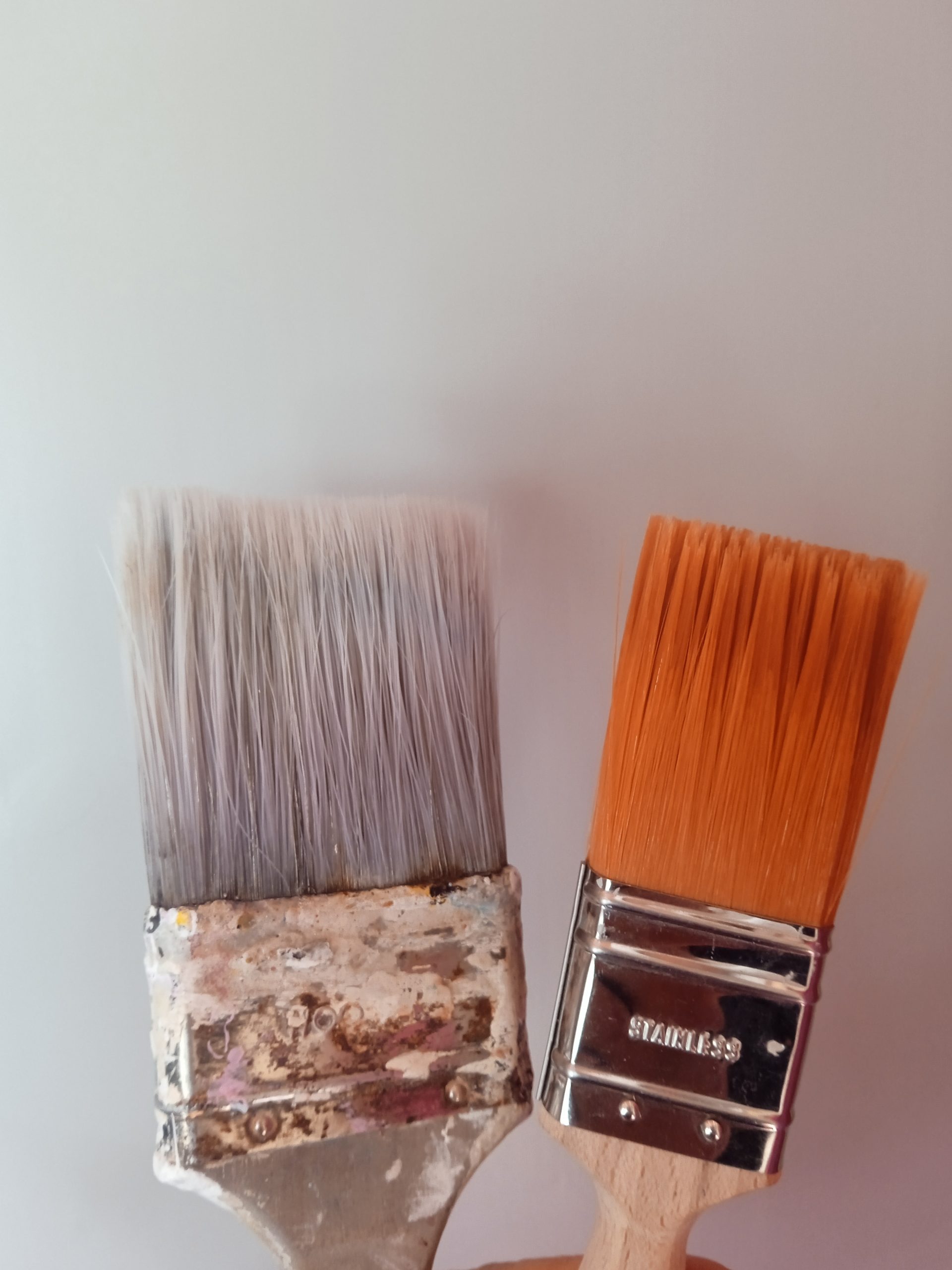
The two synthetic bristle brushes pictured are excellent but so different. The large one is slim but still holds enough paint to brush out a decent area between reloads. It is beautifully balanced and fits my hand like a glove.
On the other hand the 1.5″ brush holds just as much paint as the larger brush and cuts a much cleaner straight line, but the handle style isn’t ideal for hours on end of work – at least not for my hand.
And many painters in Europe wouldn’t even consider using this type of brush, preferring the artist style.
Change is irresistible
Nowadays, paint brush manufacturers understand the variables and the foibles of their customers. They also know how resistant to change the painting industry can be, so new products really have to deliver something special.
In both cases, the manufacturers of these important tools of the trade offer an extensive range to try cover the variable requirements of not just small hands v large hands but type of paint and specific tasks. Are we talking precise lines v block colour; viscous or non-viscous coatings and so on. At times the trade is faced with the paradox of choice, where confusion reins. But I think it is better that way than how it was before 2010.
The Spanish have three words for paint brush
Who knew?
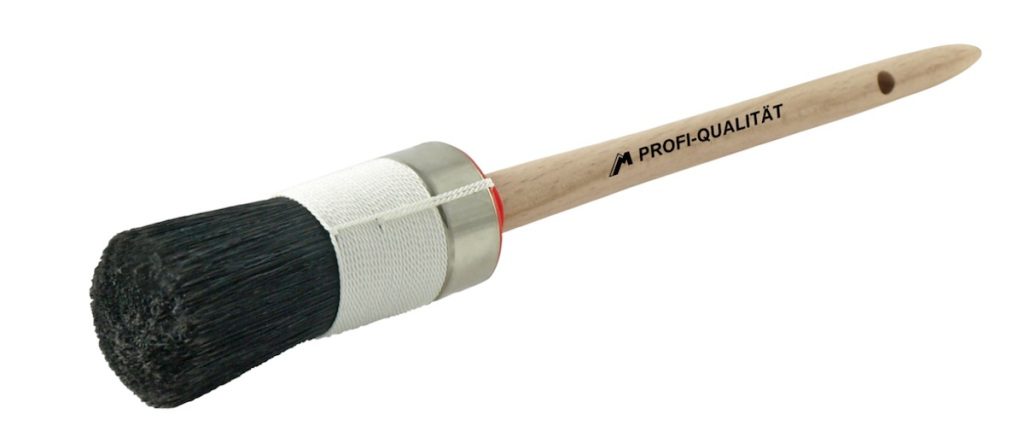
- Brocha – a brush that isn’t a paletina or a pincel. That would be a continental round stock brush, or as the Brits would call it, a big artist-style brush.
- A pincel is a type of brush that originated in Spain, characterized by its multiple sets of bristles or stocks. This design feature is found in various brushes, including artist brushes, 3- or 5-ring dusting brushes, and high-end brushes like Hamilton’s wallpaper hanging brushes.
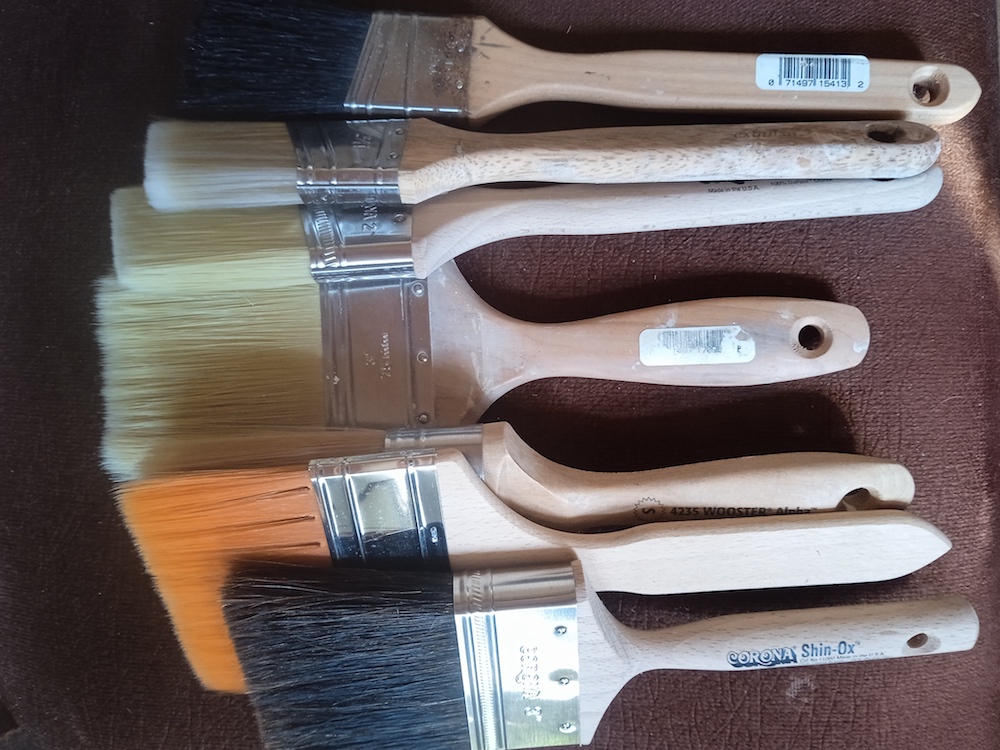
- Paletina is a conventional style paint brush like the ones in the image below. A right proper paint brush.
How the UK painting industry got 2010 so wrong
The abundance of choice of paint brush and paint wasn’t the norm on island UK in the 80’s, 90’s and early 2000’s. The trades-men and -women of today looking to improve the speed and quality of their work are blessed with a choice that never existed even 10 years ago in Britain.
Suppliers used to hold the keys to the market and sold what they wanted. In other words, painters had to buy and make do with products that made most sense and caused least issues for the merchants. As a result, the status quo persisted for decades. Ask any serious painter what the bst brushes were and they would all say hog hair bristle brushes from Hamilton – for oil-based paints, water-based wall paints, whatever.
AN EU regulation that helped
The stranglehold of the UK merchants loosened post 2010 when EU regulations forced paint manufacturers to reformulate away from oil-based to water-based paints. The old guard paint manufacturers, as well as the brush makers felt the repercussions for years.
I have no idea what the chemists at the mainstream brand leaders at Dulux were up to, but they were certainly shown up by independent paint manufacturers who appear to have been preparing for 2010 for years in advance. Farrow and Ball had been working on EU compliant hybrid paints since 2004 or 2006, from memory. They, plus Little Greene and Bedec seamlessly delivered high quality acrylic coatings without missing a beat. The small guys also reformulated their oil paints to meet new standards. In contrast the hurriedly prepared brand-leading UK trade paints were almost unusable in 2010and way past the deadline.
Who knew that new paint needed new brushes?!
The shock waves in the UK paint industry grew when the trade realised that a traditional hog hair bristle brush, the pride of British painters for decades, did not work in an acrylic paint, unless you liked tram lines.
Every UK decorating forum was flooded with take-downs of acrylic paint not levelling; acrylic paint had no body therefore it was rubbish; and even acrylic paint was hopeless when applying it in heavy rain because it washed away, whereas oil paint just pitted! Yes, the painters in England were dredging the bottom of the excuses barrel desperate not to change, especially not give up on the best of British brushes.
Push back
Fortunately there were a small number of UK painters who knew that acrylic paint had existed for decades in USA and Europe. The Germans formulated and popularised acrylic paint technology in mainland Europe and in the 60’s their tech was exported to the USA who obviously ran with it and did a good job too. Smart UK painters deduced that surely that type of technology wouldn’t have prevailed had the painters in Germany and the States held the same reservations as vocal UK painters.
Specialists like Ron Taylor, even in 2004, were already tracking down the innovative US brush companies like Proform, Wooster, Corona and Purdy. Those companies were making brushes that paired perfectly with local made acrylic paint. The art of painting had moved up a notch, as tradesmen had to master selecting which brushes to use with which paint to leave beautiful flat finishes.
In the UK, choice was one type of brush, hog hair, pick your size. And if you were lucky, you could have a Purdy Monarch. Not a bad brush for acrylic and oil paint but not exactly the best in either.
The pioneers tried the brushes out on live jobs and experienced great results especially with paint that was not from brand-leading UK companies.
Brush makers stirred
When the pride of the UK brush industry stirred, their “new” synthetic brushes were found to be next to useless, far from Perfection. When confronted with the facts about the wonders of American-made brushes, I experienced the UK’s top brush manufacturer putting their hands over their ears and whistling Dixie.
Come on you Foxes!
The speed of change with UK brush development was glacial, which was good news for the early adopters. When the Fox brush range came out, a UK-made brush designed by a crack kitchen painter, it was technically so far ahead of any other British brush. And on testing in the US it was demonstrated cutting the longest straight lines of any brush, even the Proform Picasso, the benchmark for “best brush”.
Unfortunately Fox didn’t have the marketing budget to wipe the UK floor with the big American boys from Wooster, Corona and Purdy. And not enough of the local trade was up for change to an orange bristle brush. Maybe they should have made them red, white and blue.
A big bunch of money flowed from the UK trade over to American brush companies, and further afield too. Royal and Langnickel comes over in boatloads from China; Axus from the Far East; Staalmeester via Holland. The Paint Warrior brushes, designed by Brits are made by Arroworthy in America, and so it goes on. Anything but get behind literally the best synthetic brushes anywhere, made in the UK
How many faux pas could the UK trade possibly make?
I have a question
I am curious about the history of paint and brushes in Spain. The average Spanish “latex” wall paint (known as emulsion in the UK) is actually high acrylic content water-based. I used Titanlux Monocapa in 2004, great paint. In other words, Spain has been streets ahead of the UK in terms of paint tech. But to be honest, I don’t see great brushes around. What am I missing?
If you are in the trade and want to comment below, you are welcome to contribute to the conversation. Pintura Adelante can also be found on social media. And we welcome support from Value for Value fans. See details in the footer.
Leave a Reply