
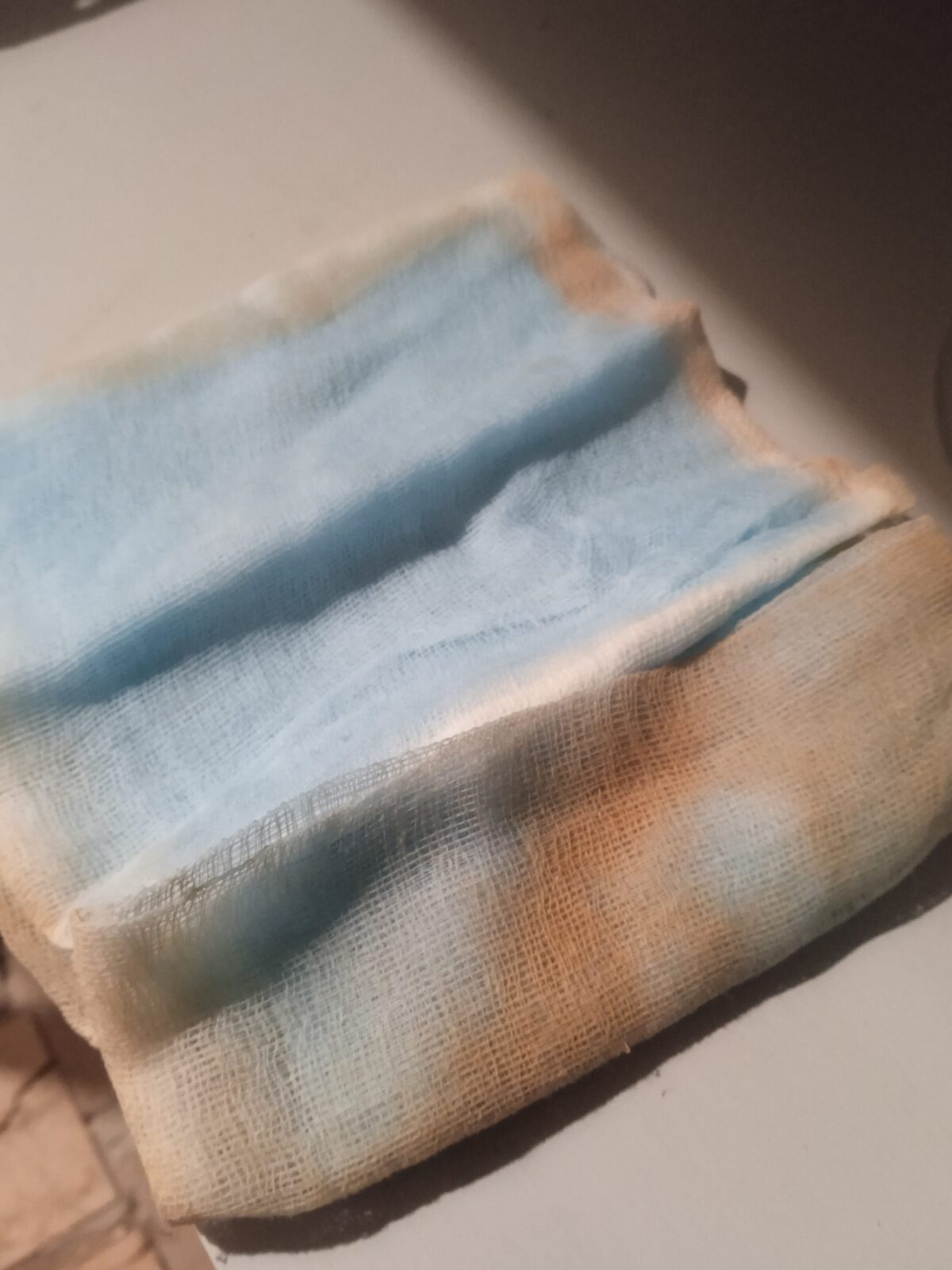
Tack rags. An indispensable painting tool of the trade making the difference between the ordinary and the very professional.
Dust is the enemy of the professional painter. Forget wrecking lungs, more importantly for a painter, dust ruins finishes. It takes a great deal of effort and energy to prepare and paint a dust-free surface. Imagine the cost and the lengths car manufacturers go to to ensure immaculate coach work.
Tack rags are buff or yellow cloth with a slow drying oily solution impregnated into the material. You wipe over the surface until the pores fill, before folding out another surface. There are 32 clean surfaces available before the rag is fully dust laden and useless. Imagine all that dust in your topcoat, and be happy you had a tack rag.
Tack rags back in the day
There used to be members of the painting trade that went beyond fussy neat freaks. The bank decorators who varnished the counters were a breed apart. They would create tents made of muslin, the open weave light weight cloth, to protect the work surfaces to be varnished, and flick varnish all over the muslin to make it sticky.
Their varnish brushes, oval shaped and packed dense with fine hog hair bristles, were beyond clean. Before decanting the varnish, they wiped their clean metal paint kettles for good measure with a sticky cloth, the precursor to the mass produced tack rag. Then they would crawl inside the tent wearing a hair net and clean overalls, carefully wipe the surfaces to be varnished with their homemade tack rags, and varnish like the wind.
The modern approach to cleanliness and dust free painting.
Paint sands down really nicely with a suitable abrasive. I turn on a trusty vacuum cleaner and connect my Mirka Abranet sanding block or ROS (random orbital sander), to keep the vast majority of dust out the air.
When finished sanding I attach a soft brush to the vacuum attachment and carefully remove the finest dust. This is the mechanical version of the traditional dusting brush, the painter’s most important brush.
If your cleanliness regimen stops there, which applies to most of the trade most of the time, you might be lucky and not notice any dust in your finish. However, I was taught from day one at college to carry a tack rag, the small but vital difference between an end result that “might be OK” and “definitely OK” .
Conventional tack rags and acrylic paint don’t mix.
Conventional tack rags are buff and the oily solution is compatible with oil paint, not with water based paints. Oil and water don’t mix. So, taking a leaf out of the automotive painting trade, which in my view is the pinnacle of coatings applications, for water-based paints use a blue tack rag.
Residential painting trade recommends a damp microfibre cloth as a ‘tack rag’
There’s not much gets past an Akzo Nobel technical demonstrator and they recommend the damp cloth. It’s not my first choice for dust removal but it ties in with one very useful tip, to slightly dampen the surface to be painted, to improve the flow out of your acrylic topcoats.
So it is hard to argue against the Akzo Nobel approach to wipe clean your sanded surfaces with a damp microfibre cloth before applying water-based finishes.
As ever, there is no blanket answer to every circumstance but now you have the options that the top professionals use.
Leave a Reply