
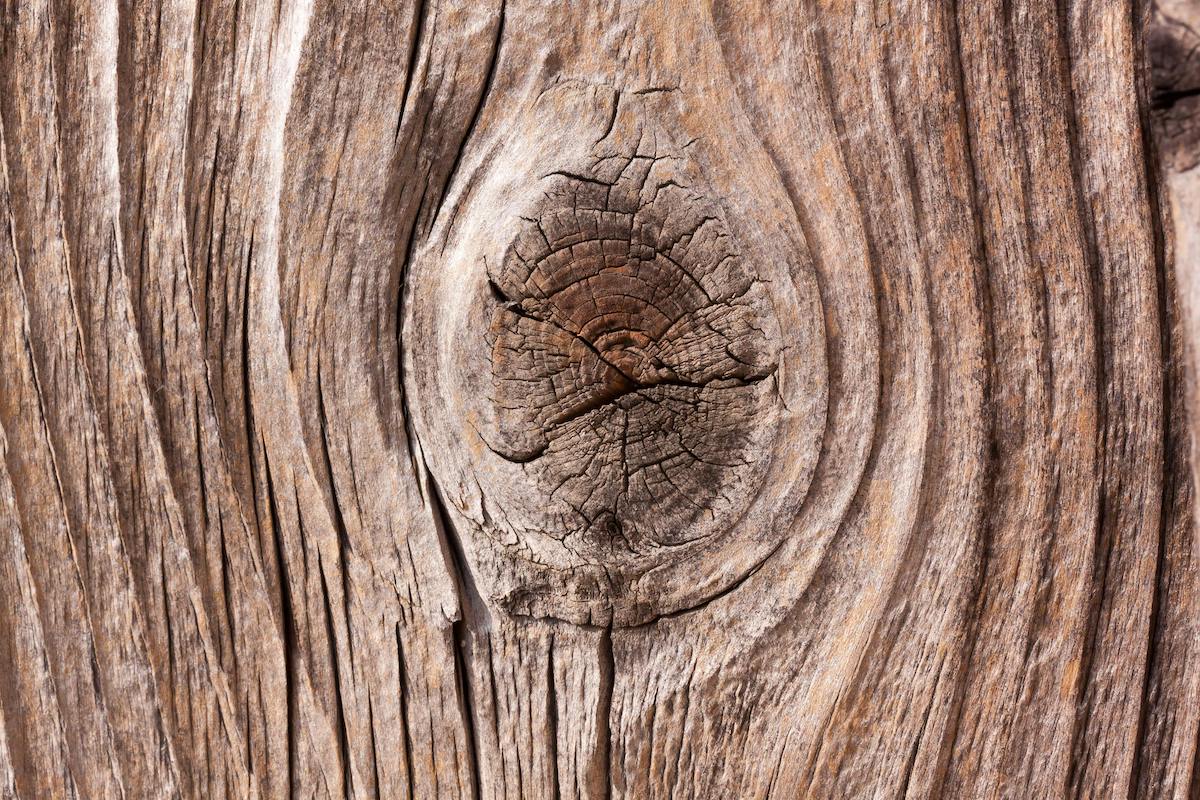
As a student at college or working with experienced decorators, you are told to be careful with how you use shellac knotting or Zinsser BIN when priming exterior woodwork.
Knotting is the industry standard shellac-based sealer that holds back the resin and tannin that you sometimes see seeping out of knots and staining paintwork, especially lighter colours. Zinsser BIN is a more sophisticated stain-blocker version, more like a white pigmented sealer, still shellac-based.
Knotting and BIN both work 95% of the time, if applied correctly: 2 fast-drying coats, taking care to feather out the edges.
But wo betide any painter who decides to prime all the exterior surfaces of wooden windows with these paints.
Why is shellac suitable for knots but not exterior woodwork?
The blanket response is «shellac is brittle». True, but it doesn’t fully explain why shellac isn’t ideal for priming exterior woodwork, especially when it is used religiously on knots, which, the last time I looked, are wood too, right!
We know shellac is brittle, by the way, just by looking at the build-up on a knotting bottle. Another property is that it is also a reversible coating. It is alcohol-based and dissolves the previous layer when applying a subsequent coat.
Applying Knotting and Sealers
When sealing knots, the recommended practice is to work fast with a light touch on that second coat. You lightly coat the knot before feathering out the edges of the knotting or the BIN onto the surrounding timber. That applies to both coats. We are told this overlap on to the main timber face helps prevent ridging and ensures better adhesion.
But it’s overlapping onto the wood. That’s contradicting the advice. Knots aren’t flexible, the surrounding wood is. Overlap the film across both surfaces, and when it dries brittle, surely there is going to be a problem?
Implication of Shellac’s Brittleness
Since shellac is brittle and knots are more rigid than the surrounding timber, feathering shellac onto the main surface can cause issues.
When the timber swells or shrinks due to moisture or temperature changes, the rigid shellac may not move with it.
This mismatch can lead to flexing, resulting in cracking or peeling and eventual adhesion failure at the edges over time.
Best Practice for Knot Sealing?
If you apply the theory, best practice should be
To maintain adhesion and prevent failure, it’s better to limit shellac or knotting to just the knot area without feathering it onto the surrounding timber. This reduces the risk of cracks forming when the timber moves.
Good grasp of the issues but good luck with that! I can’t see it catching on. Precise artistic dabs on knots with no overlapping?
I guess we will keep on the old path, getting away with our contradictory time-served techniques.
In conclusion
I am being very nit-picky. In practice, as in age-old best practice, I can’t recall too many failures around the edge of knots, but at least this quick deep dive clarifies once and for all why shellac is a poor wood primer on exterior woodwork:
- Poor resistance to moisture and heat
- Inherently brittle dry film
In my experience, I’d say most failures with knotting occur when the paint film on painted exterior woodwork is exposed to full sun and a knot bleeds and stains the paint. That is a most difficult scenario to treat. At the extreme you can drill them out and refill.
Are there better techniques for dealing with resin bleed?
Shout out to Phil Beckwith
This post was prompted by a comment on the Phil Beckwith Youtube channel about shellac v Aluminium Leafing Primer. I cannot send him coffees by way of thanks, but if he had a Lightning wallet, I could zap him real money.
An alternative to Zinsser BIN
Aluminium Leafing Primer, ALP, is another olde worlde primer that is not shellac-based.

It is like liquid tin foil, so it can do what Zinsser BIN can do on exterior woodwork – hold back resin and tannin – while also being able to do what BIN cannot do – handle some flex in the substrate.
I don’t recall using ALP on interior timber surfaces. Shellac is fairly effective as a stain block primer indoors because without exposure to moisture and heat, it is less likely to become brittle or lose adhesion and fail.
Podcast alert
I have published three new podcast episodes on Nostr.build and am showing them on the Pintura Adelante website. I am starting with a trip through my decorating history from way back when. And from there I plan to build out a fuller picture of products and techniques, to help DIY and pros navigate future decorating projects.
I will also include business and marketing insights, with a focus on how painters – anyone in the construction industry really – can use Nostr, which I think is the future of joined up social media, online sales and marketing.
Deja una respuesta